Fougasse (French-Style Flatbread)

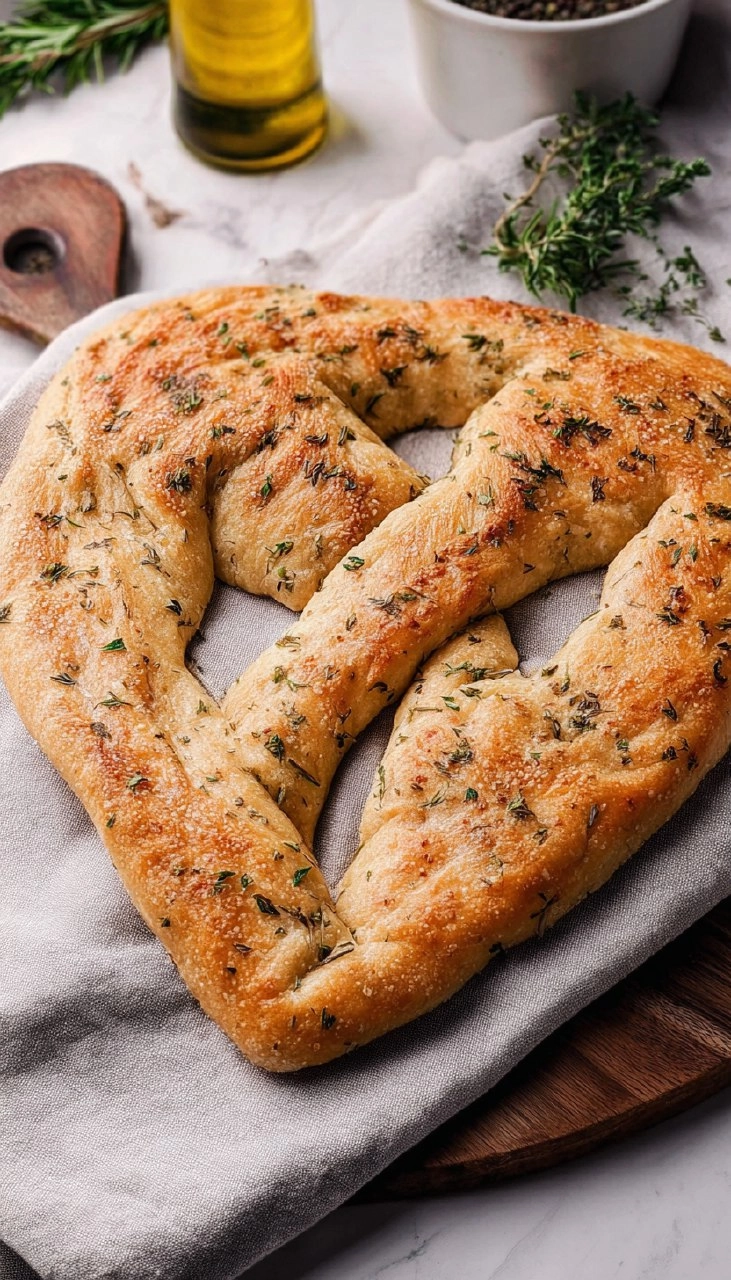
Homemade fougasse is more than just a bread; it’s a delightful journey into the heart of French baking. This rustic flatbread comes with lovely, airy pockets, a crisp crust, and a warm, chewy interior that simply begs to be shared. Renowned for its leaf-like shape, fougasse can be adapted with various toppings, from fragrant herbs to a sprinkling of flaky sea salt, giving it a personality that’s as vibrant as its flavor. Once you take your first bite, you won’t just taste bread; you’ll savor the craftsmanship and tradition behind this wonderful treat.
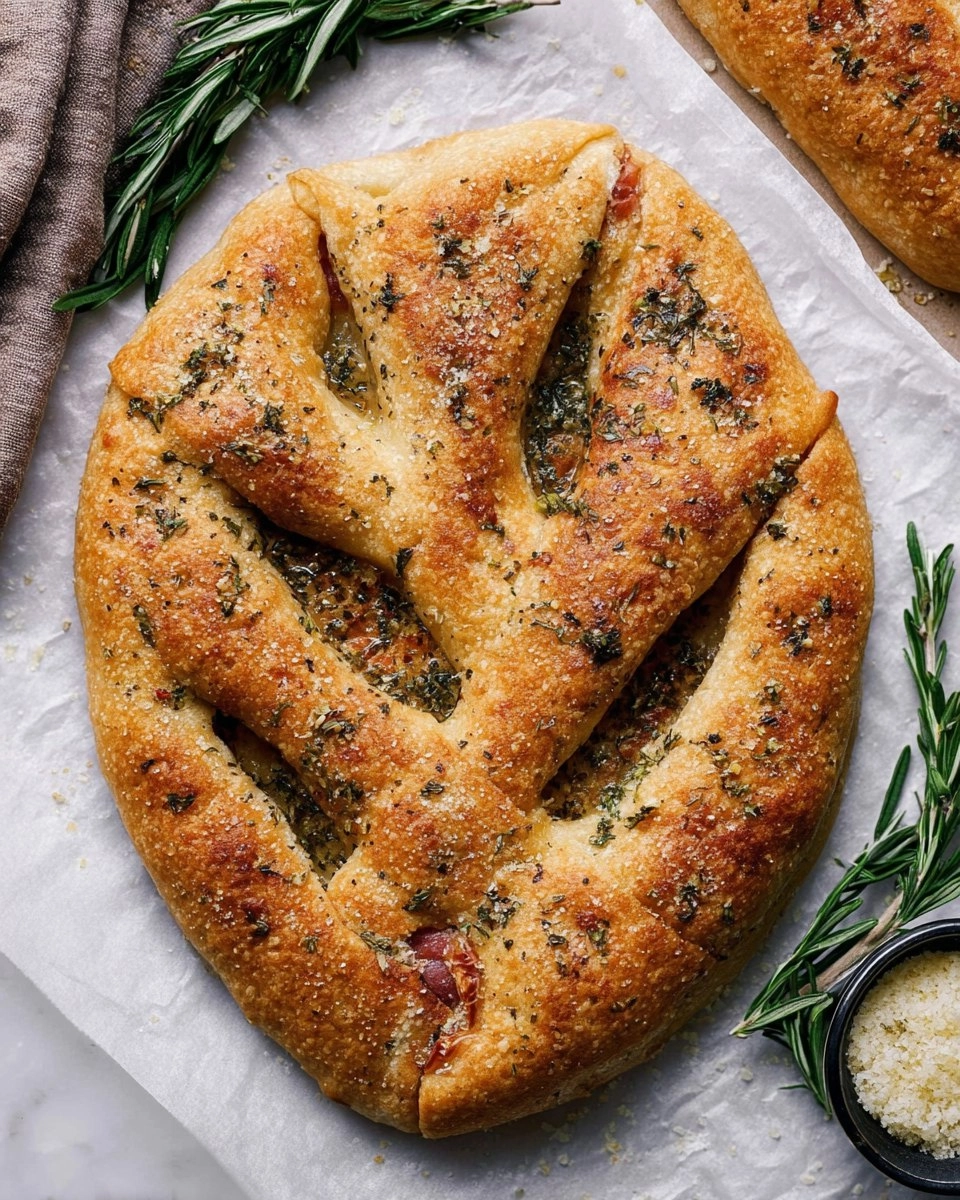
Every time I make fougasse, I’m reminded of joyful gatherings around the kitchen table, where the aroma of freshly baked bread fills the air. This recipe is particularly special because it captures the beauty of artisanal bread-making without overwhelming you with complexity. It’s remarkably simple, budget-friendly, and brings a sense of achievement that store-bought alternatives just can’t match. With a few basic ingredients and a bit of time, you’ll have a stunning loaf that’s perfect as a snack, an accompaniment to soups or salads, or even as part of a charcuterie board. I can’t wait for you to give this a try!
Table of Contents
- Why You’ll Love This Recipe
- Ingredients You’ll Need
- How to Make Fougasse (French-Style Flatbread)
- Storing & Reheating
- Chef’s Helpful Tips
- Recipe FAQs
- Fougasse (French-Style Flatbread)
Why You’ll Love This Recipe
- Simple & Quick: Prepare and bake this delightful flatbread in just about 45 minutes of active time.
- Irresistible Flavor: The combination of bread flour, whole wheat, and olive oil creates a texture that’s both chewy and crunchy.
- Eye-Catching Appeal: With its unique shape and lovely toppings, fougasse adds a wow factor to any meal.
- Flexible Serving: Perfect for any occasion, whether it’s a casual snack, a fancy dinner, or a picnic treat.
- Diet-Friendly Options: Use gluten-free flour or vegan toppings to adapt the recipe to various diets.
Ingredients You’ll Need
- 1 cup (130g) bread flour: Provides structure and chewiness. Be sure to spoon and level it for accurate measuring.
- 1/8 teaspoon instant or active-dry yeast: Helps the dough rise, creating those lovely airy pockets.
- 1/2 cup (120g/ml) room-temperature water (about 70°F / 21°C): Essential for activating the yeast.
- 1 and 1/2 cups (195g) bread flour: Again, for structure and a bit more chewiness; spooned & leveled.
- 1/2 cup (65g) whole wheat flour: Adds depth of flavor and a nuttier profile.
- 3/4 teaspoon instant or active-dry yeast: Reinforces the dough’s rise; no need to mix types if you prefer one.
- 1 teaspoon table salt: Enhances the overall flavor of the bread.
- 1/2 cup (120g/ml) room-temperature water: Helps bind the dough; ensure it’s not too cold or warm.
- 2 tablespoons (28g) extra-virgin olive oil: Adds richness and a lovely flavor. You can adjust this based on preference.
- Optional toppings (flaky sea salt and herbs like rosemary, thyme, or herbes de Provence): These elevate the flavor and visual appeal.
How to Make Fougasse (French-Style Flatbread)
Make the Biga: In a medium bowl, whisk together 1 cup (130g) of bread flour and 1/8 teaspoon of instant or active-dry yeast. Pour in 1/2 cup (120g/ml) of room-temperature water. Stir with a silicone spatula until combined, cover tightly with plastic wrap, and let it rest at room temperature for 8–24 hours.
Prepare the Dough: In a large bowl or a stand mixer fitted with a dough hook, whisk together 1 and 1/2 cups (195g) of bread flour, 1/2 cup (65g) of whole wheat flour, 3/4 teaspoon of yeast, and 1 teaspoon of salt. Add in your biga, 1/2 cup (120g/ml) room-temperature water, and 2 tablespoons (28g) of olive oil. Mix until a shaggy dough forms.
Knead the Dough: If using a stand mixer, knead on medium-low speed for 3–5 minutes, until the dough becomes smooth and slightly tacky. Alternatively, mix by hand and knead on a lightly floured surface for 3–5 minutes, just until it’s smooth. Aim for a sticky but workable dough.
First Rise: Drizzle olive oil around the inside of your mixing bowl. Place the dough ball in the bowl and turn it to coat in oil. Cover tightly and let it rise for 45 minutes up to 2 hours.
Fold the Dough: Gently lift the dough at the 12 o’clock position and stretch it towards 6 o’clock, folding over itself. Rotate the bowl and repeat until complete. This folding adds strength to your dough.
Second Rise: Flip the dough so it’s seam-side down. Cover it tightly again and let it rest for another 45 minutes up to 2 hours.
Shape the Fougasse: Turn the dough out onto a piece of parchment paper. Use your fingers to press it into a rounded triangle or an egg shape, roughly 12 inches long by 6 inches wide at the base.
Rest Again: Lightly cover the dough and allow it to rest for 30 minutes to up to 2 hours.
Cut and Shape: Using a sharp knife or kitchen shears, cut down the center lengthwise, stopping about 1 inch from each end. Then make 3 or 4 diagonal cuts on each side. Gently stretch each cut to create openings that resemble leaves.
Prepare to Bake: Lightly cover again and rest for 30 minutes to 1 hour. Preheat your oven to 450°F (232°C), placing a baking stone or an upside-down sheet pan inside to heat up.
Add Toppings: Brush the fougasse with olive oil and sprinkle generously with herbs and sea salt, if using.
Bake: Slide the fougasse, parchment and all, onto your preheated baking stone or sheet. Bake until golden brown, about 20 minutes. Tap the top; it should sound hollow. For accuracy, aim for an internal temperature of 190–200°F (88–93°C).
Finish and Serve: If you like, brush with more olive oil while warm. Fougasse is delicious served warm with olive oil and balsamic vinegar for dipping, or alongside soups and salads.
Enjoy: Fougasse is at its best on the day it’s baked. Store leftovers covered at room temperature for up to 2 days. If you’d like to refresh it, pop it in a 350°F (177°C) oven for 5–8 minutes.
Storing & Reheating
To keep your fougasse fresh, store it covered at room temperature for up to two days. For longer storage, you can refrigerate it for up to a week in an airtight container, though this may alter the texture slightly. If you want to store it for up to three months, freezing is your best bet. Wrap it tightly in plastic and then aluminum foil. For reheating, place it in a preheated 350°F (177°C) oven for about 5–8 minutes. This will bring back its crispy crust while maintaining a soft interior.
Chef’s Helpful Tips
- Avoid adding too much flour during kneading, as a sticky dough is key for the desired texture.
- Ensure your water is at room temperature; if it’s too cold, it may slow down the yeast activation.
- Don’t rush the rest periods; they’re crucial for developing flavor and texture.
- Experiment with toppings like sun-dried tomatoes or olives for added flavor.
- Make your dough in advance and allow a slow rise in the refrigerator for up to 24 hours for even deeper flavor.
- Ensure your baking surface is preheated to achieve that perfect crust.
Fougasse is a beautiful bread that encapsulates the joy of homemade baking. With its crispy exterior and fluffy interior, it’s not just something to eat — it’s an experience to relish. Don’t hesitate to try different toppings or serve it in various ways. Let your kitchen become a hub of creativity as you explore what makes this French flatbread uniquely yours.
Recipe FAQs
Can I use all-purpose flour instead of bread flour?
How do I know when my dough has risen enough?
Can fougasse be frozen?
What other toppings can I use?
More Breakfast and Brunch Recipes
- Irish Soda Bread Scones
- Baked Cinnamon Sugar Donuts
- Fluffy Nutella Muffins
- Banana Zucchini Bread
- Homemade Tomato Soup
👉 If you make my Fougasse (French-Style Flatbread) recipe, please leave a comment and a star rating — it really helps others discover the recipe.
Follow me on
Pinterest
for more easy recipes.

Fougasse (French-Style Flatbread)
- Prep Time: 45 minutes
- Cook Time: 720 minutes
- Total Time: 12 hours 45 minutes
- Yield: 12 servings 1x
- Category: Bread
- Method: Baking
- Cuisine: French
Description
This Fougasse is a delightful flatbread with an irresistible flavor, easy prep, and flaky texture. Ideal for quick dinners, and pairs perfectly with soups and salads!
Ingredients
- 1 cup (130g) bread flour
- 1/8 teaspoon instant or active-dry yeast
- 1/2 cup (120g/ml) room-temperature water (about 70°f (21°c))
- 1 and 1/2 cups (195g) bread flour (spooned & leveled), plus more as needed
- 1/2 cup (65g) whole wheat flour (spooned & leveled)
- 3/4 teaspoon instant or active-dry yeast
- 1 teaspoon table salt
- 1/2 cup (120g/ml) room-temperature water
- 2 tablespoons (28g) extra-virgin olive oil, plus more as needed
- optional, for topping: flaky sea salt and herbs, such as rosemary, thyme, or herbes de provence
Instructions
- In a medium bowl, whisk together the bread flour and yeast; then add water and mix until combined. Cover tightly with plastic wrap and rest at room temperature for 8–24 hours.
- In a large bowl, combine bread flour, whole wheat flour, yeast, and salt. Add the biga, water, and olive oil. Mix until a shaggy dough forms, then knead by hand or using a stand mixer for 3–5 minutes until smooth and slightly tacky.
- Drizzle olive oil in the mixing bowl, place the dough inside, and turn to coat. Cover tightly and let rest for 45 minutes to 2 hours.
- Using an olive oil-greased spatula, make 4 folds in the dough, turning the bowl each time. Flip the dough seam side down and cover, resting again for 45 minutes to 2 hours.
- Transfer the dough to parchment paper, shaping it into a rounded triangle or egg shape (12×6 inches). Cover and let rest for 30 minutes to 2 hours.
- Cut the dough lengthwise down the center and make 3 or 4 diagonal cuts on each side. Stretch the cuts to create a leaf-like appearance.
- Cover lightly and let rest for 30 minutes to 1 hour. Preheat the oven to 450°F (232°C).
- Brush the dough with olive oil and sprinkle with herbs or sea salt before baking.
- Slide the fougasse onto the preheated baking stone or sheet and bake for about 20 minutes until golden brown and hollow when tapped.
- Optional: Brush with more olive oil before serving. Enjoy with dipping oil, balsamic vinegar, soup, or salad.
Notes
Fougasse tastes best served fresh but can be stored covered at room temperature for up to 2 days.
If reheating, warm in a 350°F (177°C) oven for 5–8 minutes to restore crispness.
Experiment with toppings like herbs or cheese for added flavor.
Nutrition
- Serving Size: 1 slice
- Calories: 150
- Sugar: 0g
- Sodium: 210mg
- Fat: 3g
- Saturated Fat: 0.5g
- Unsaturated Fat: 2.5g
- Trans Fat: 0g
- Carbohydrates: 28g
- Fiber: 2g
- Protein: 5g
- Cholesterol: 0mg